
What Are Payments on Account?
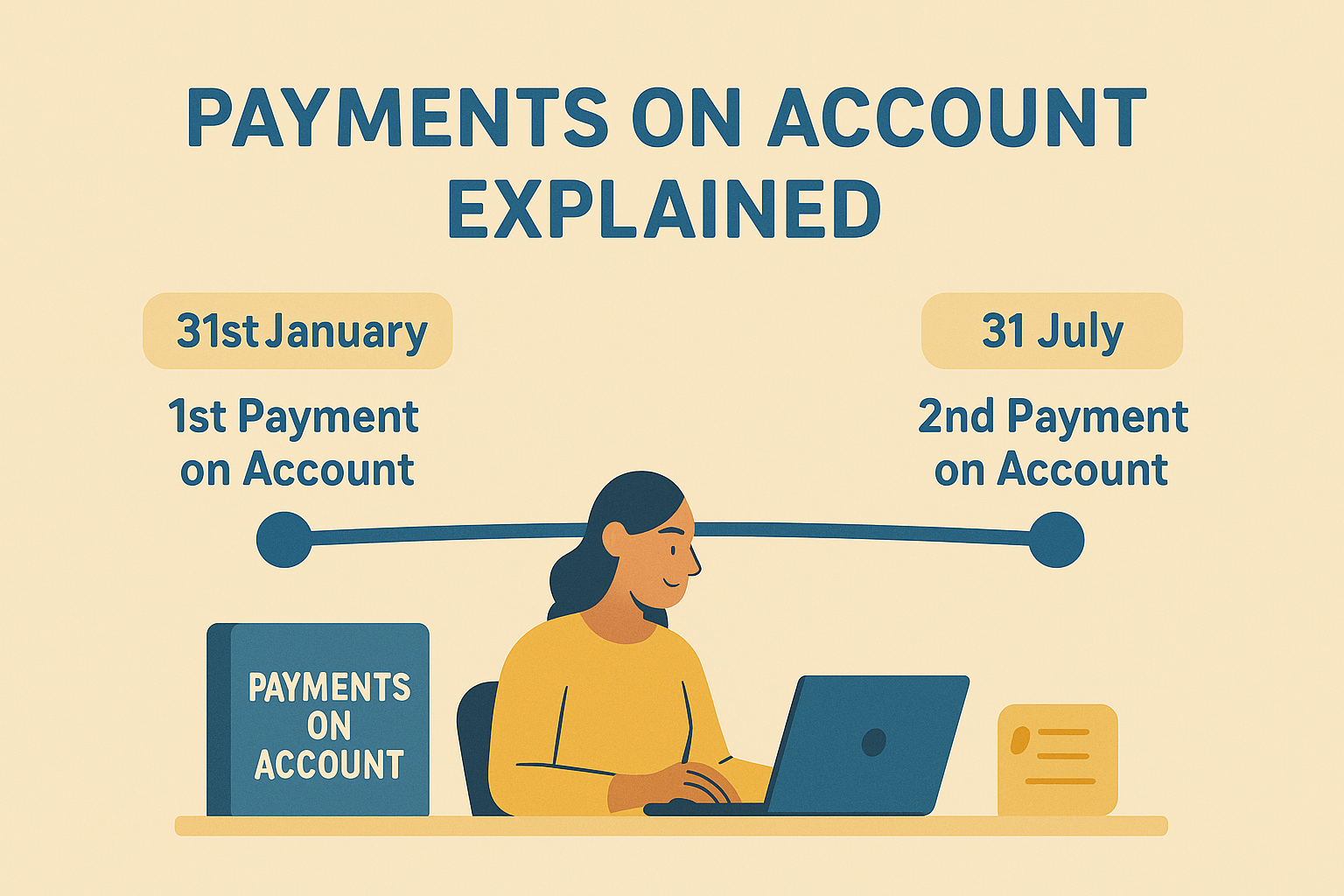
Payments on account are advance payments towards your next Self Assessment tax bill. They only apply if:
- Your last tax bill was more than £1,000, and
- Less than 80% of your tax was collected through PAYE (for example, most of your income came from dividends rather than salary)
HMRC assumes your next year’s tax will be similar, so they ask you to pay some of it upfront, split into two instalments. It’s important to be aware of these if this is your first year trading, as they can come as a nasty surprise.
How it works:
You pay:
- 50% of last year’s tax bill by 31 January
- Another 50% by 31 July
When you submit your next tax return, HMRC checks how much you actually owe and:
- If you’ve paid too much → you’ll get a refund or credit
- If you’ve paid too little → you’ll make a “balancing payment” by 31 January
A worked example:
Let’s say:
- Your 2024/25 tax bill is £2,000
- You submit your return in January 2026
You’ll pay:
- £2,000 for 2024/25 by 31 January 2026
- Plus a payment on account of £1,000 (50%) for 2025/26
- Another £1,000 by 31 July 2026
Then in January 2027, once you’ve submitted your 2025/26 return, HMRC will work out the difference and you’ll either make a balancing payment or get a refund.
Payment timeline at a glance:
| Date | What you pay |
|---|---|
| 31 Jan 2026 | - £2,000 (2024/25 tax bill) - £1,000 (1st payment on account for 2025/26) |
| 31 Jul 2026 | £1,000 (2nd payment on account for 2025/26) |
| Jan 2027 | Balancing payment or refund for 2025/26 |
Can I reduce my payments on account?
Yes, if you think your income will be lower next year, you can ask HMRC to reduce them via your HMRC online account or through your accountant.
⚠️ Important: If you reduce them too much and end up owing more tax, HMRC may charge interest or penalties.
If you'd like to read more, we also have a longer blog post on this topic. And of course, if you have any questions, just drop us a line at support@mightyaccounting.com.
